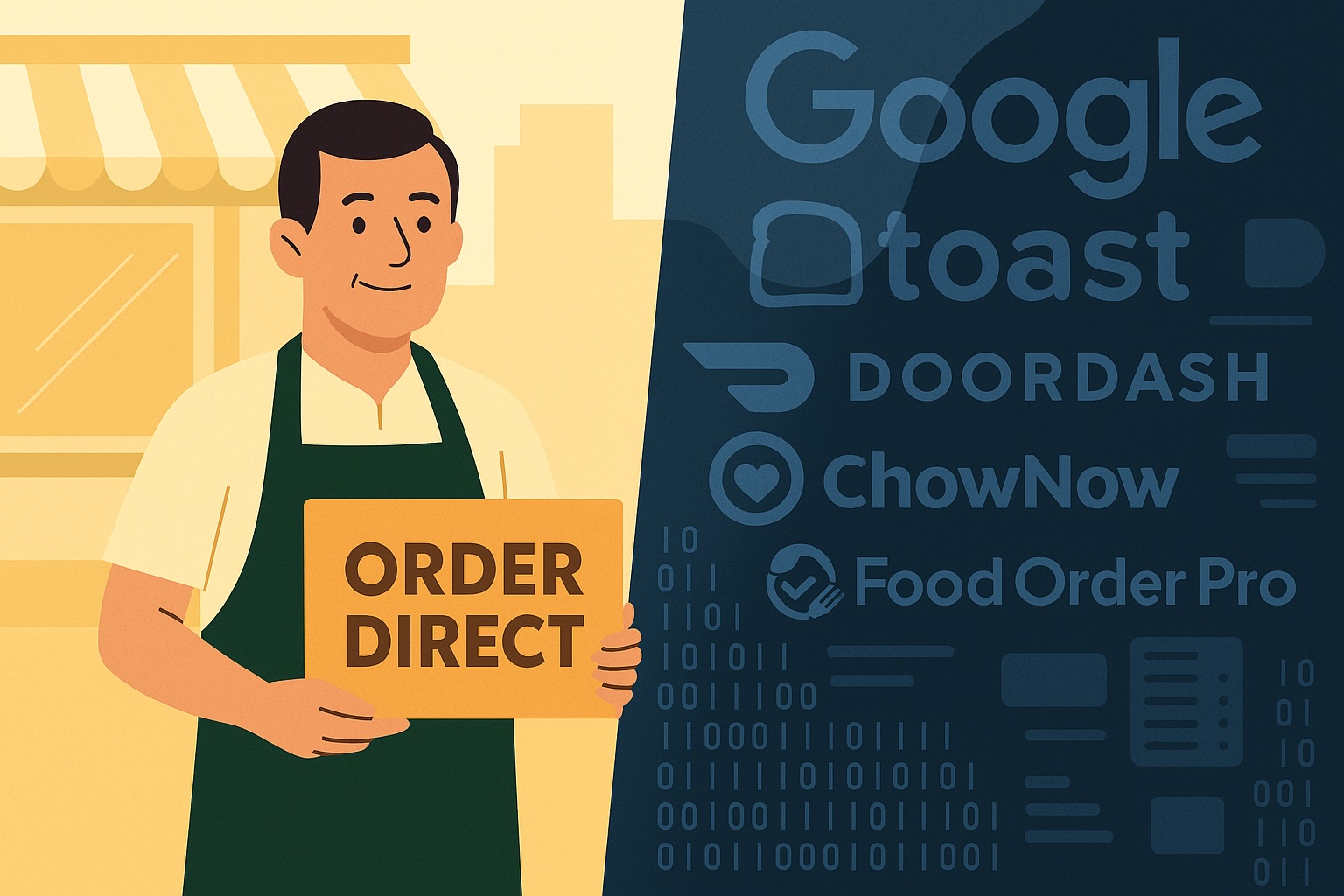
Are you a restaurant owner debating whether to upload your menu and ordering system directly to Google through a major platform like Toast, ChowNow, Olo, or Clover that creates an ordering link icon on your Google Business page—or use a direct link to your ordering platform but forgo seeing a icon associated with your ordering link.
The answer can make or break your success in today’s competitive restaurant landscape. We’ll break down the real pros and cons for you, so you can protect your profits, your customers, and your independence.
Why This Decision Matters in 2025
As of 2024, Google no longer processes restaurant orders itself. Instead, Google redirects customers to third-party partners or your direct online ordering link. Using Toast, ChowNow, Olo, or Clover means your menu and details are uploaded directly to Google as part of their Food Ordering Partner program. Your reward? A branded icon and higher placement in the “Order Online” area on your Google Business Profile.
But at what cost? When you upload all your restaurant’s menu and business data, you’re feeding Google’s data machine—and possibly opening the door for data mining by delivery giants.
The Pros and Cons: Partner Integration vs. Manual Direct Link
- Partner Route (Toast, ChowNow, Olo, Clover): You get a branded icon, and sometimes higher placement in Google’s “Order Online” box. However, you must upload your entire menu and business details to Google. This makes it easier for Google’s ad platform to use your data, increasing the risk of targeted competition from big delivery apps. You also have less control if Google’s rules change.
- Manual Direct Link (like Food Order Pro): No icon and possibly lower position, but only your link is shared—not your menu or data. You own your customer journey, and limit the data Google can use for targeting or to help competitors. The setup is simple, and you’re less exposed to sudden big tech changes.
The Hidden Danger of Partner Integrations
Uploading your menu, prices, and business details to Google helps them build better ad targeting systems. Big players like DoorDash can spend millions to target customers searching for “tacos under $5”—and Google’s AI makes it easy for them to undercut you. You can read more about these risks in our article on how no-commission ordering actually shares your data with big tech.
Google doesn’t give away your customer list, but their machine learning uses every menu, price, and click to sharpen competitive ads. In effect, you may be paying for a premium placement but also fueling the ad ecosystem that hurts your restaurant’s direct business.
Does the Icon Really Matter?
Many restaurant tech sales people say that the “Order Online” icon will drive more direct sales. I tend to agree, it creates more brand “trust” and that leads to more engagement. However not having the icon is not a deal breaker, and most customers who truly want to support your restaurant are already looking for order direct options. You can reinforce this on your own website, with in-store signs, social media posts, and email campaigns.
What restaurant tech people won’t talk about is how that weighs against the long term downside. The slight increase in click-through rate from having an icon is small compared to the risk of giving up your data and your customer relationships to Google and the delivery apps.
Why the Manual Direct Link Wins for Independent Restaurants
- Maximum Data Privacy: Google only sees your ordering link, not your menu or pricing. Less data means less fuel for competitors’ targeted ads.
- Protection from Big Tech Competition: Without menu feeds, it’s harder for DoorDash and others to micro-target your customers with ads and discounts.
- Full Ownership of Your Customer Relationship: You control the marketing, loyalty, and experience, not a third-party platform.
- Simple and Sustainable: No complex menu uploads or feeds. Less risk of changes from big tech partners that could leave you exposed.
- Empower Your Customers: With a strong message on your website and marketing, you can teach regulars to always order direct for the best price.
Industry Evidence: Why More Restaurants Are Ditching Big Tech Ordering Partners
If you want to see how big tech partners and third-party delivery apps harm restaurants, check out these must-read articles:
- The Hidden Costs of Restaurant Delivery
- Online Ordering Services Charge Huge Fees
- How Delivery Apps Eat Up Your Budget
The Bottom Line: Choose Privacy and Win in the Long Run
For independent restaurants in 2025, a manual direct ordering link is the best way to protect your business and your customers. Don’t give up your data, menu, or independence just to get an icon or a slightly higher placement in Google’s list.
Promote your direct ordering link everywhere you can, educate your customers, and use platforms like FoodOrder.Pro that put privacy and control first. It’s the smartest way to fight back against the big delivery apps—and to keep more of every dollar you earn.