
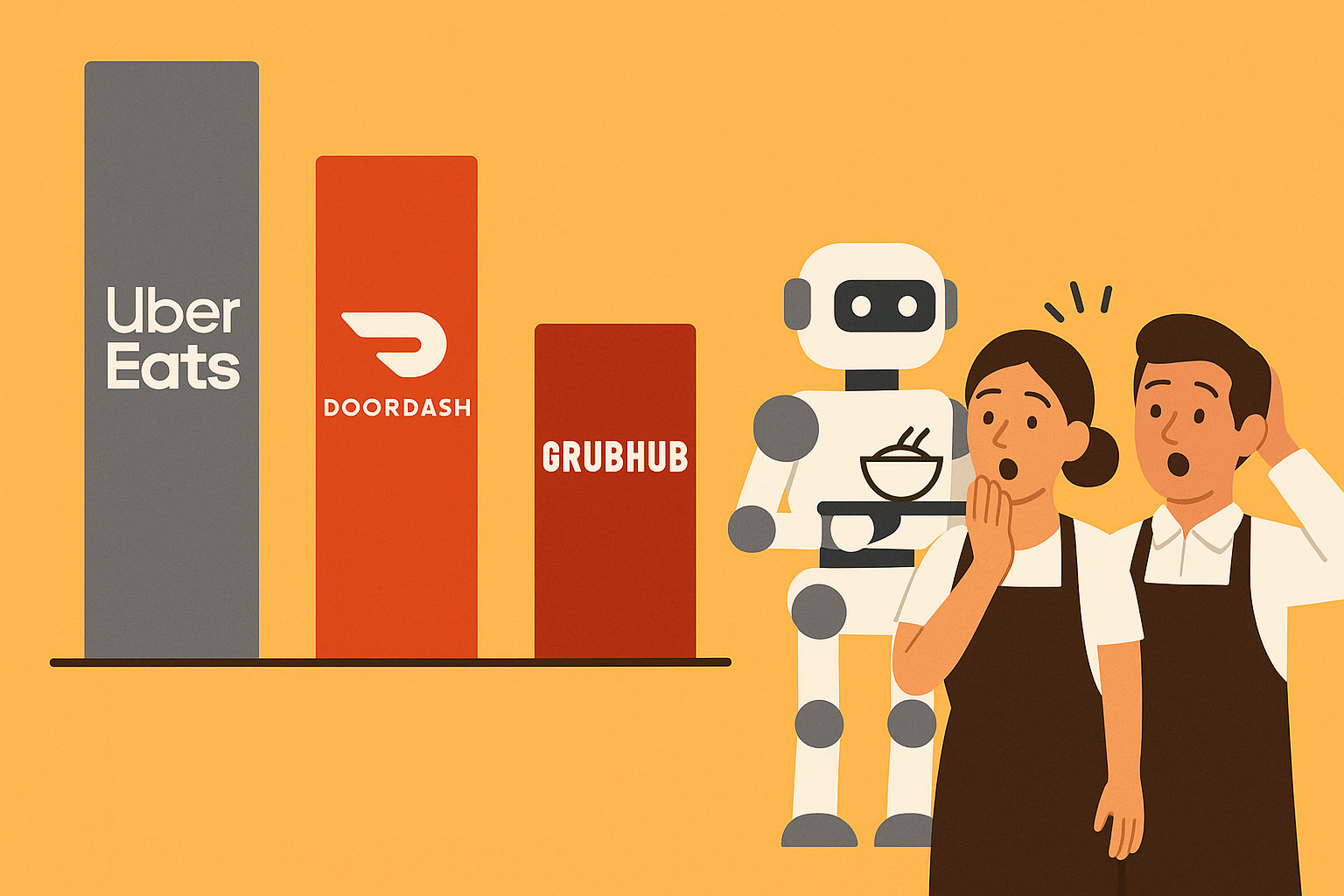
For restaurant owners, opening a restaurant is a deeply personal act of service to the community. But third-party apps like DoorDash, Uber Eats, and Grubhub, backed by venture capital, threaten to change the soul of the industry. If these big tech ordering apps dominate, what will the future of restaurants look like? In this article, part of our series How Data Scientists Took Over the Restaurant Industry, we’ll explore the potential future for restaurants, the trajectory of third-party apps, and how you can protect your business.
The Heart of a Restaurant: A Labor of Love
As a restaurant owner, your restaurant is more than a business—it’s a life. It’s about serving your community and creating special moments, like families celebrating birthdays or couples on first dates, filled with laughter over your signature dishes. You’re present in your creation: you smell the fresh herbs, feel the kitchen’s warmth, and craft each plate with care. Your staff isn’t just a workforce—they’re a family, growing together through shared pride in serving others.
Before third-party apps, your competition was other restaurant owners who shared your passion for food and community. Success wasn’t just about money; it was about creating happiness and memories. But the rise of big tech changed everything, threatening the soul of the industry.
The Rise of Third-Party Apps: A Cold New Competitor
In the early 2010s, third-party apps like DoorDash, Uber Eats, and Grubhub received massive venture capital funding—hundreds of millions to scale rapidly. They didn’t just enter the restaurant industry—they reshaped it. For the first time, restaurant owners weren’t just competing against like-minded restaurateurs. Restaurant owners were up against impersonal tech companies spending millions to funnel customers into a digital, transactional way of ordering.
Venture capitalists focus on growth, profit margins, and scale, not the warmth of your kitchen or the laughter at your tables. This cold approach clashes with the heart of the restaurant industry, leaving owners vulnerable. You trusted polished sales reps who promised growth, but as we’ve discussed in How Third-Party Apps Like DoorDash Steal Your Restaurant Customers, these apps have other motives.
How Third-Party Apps Gain the Upper Hand
Third-party apps use data science and VC money to outmaneuver restaurant owners. They employ tactics to dominate, as we’ve covered in our series:
- Data mining through “free” products: DoorDash Storefront offers no-commission ordering, but collects customer data to drive re-orders through DoorDash’s high-commission app, as detailed in How DoorDash Storefront Uses Data Mining to Target Your Restaurant Customers.
- Buying data from no-commission platforms: Platforms like ChowNow and Toast share customer data with third parties, as we discussed in How No-Commission Ordering Systems Sell Your Customer Data to Big Tech, enabling apps like Uber Eats to target your customers.
These apps don’t compete on food quality or service—they use data and money to siphon your customers into their apps, charging 15-30% commissions per order. Restaurant owners, focused on creating meaningful experiences, were blindsided, often trusting sales reps trained to deceive them into harmful partnerships.
The Future of Third-Party Apps: From Delivery to Domination
Third-party apps are expanding beyond delivery. DoorDash, Uber Eats, and Grubhub have evolved from delivery to pickup, then to ghost kitchens, and now to creating their own food brands. They use your customer data—collected through platforms like ChowNow (Is ChowNow a Scam?) or Toast (Is Toast Online Ordering a Scam?)—to target your patrons with their ghost brands, increasing competition and squeezing your margins.
Their future plans are even more alarming. CloudKitchens, founded by Uber Eats’ co-founder Travis Kalanick, is investing in robotic “Bowl Builders” to automate food production, a vision he shared on the *All In* podcast. Kalanick made the analogy of cooking in restaurants to: “I like horses but I don’t ride a horse to work.” Its worth watching the full interview so you can truly understand the real vision tech companies see for small business restaurants. Big tech companies no longer want just a commission—they want the entire order, from cooking to delivery, leaving no room for traditional restaurants.
The Future If Third-Party Apps Win
If third-party apps dominate, the future of restaurants could be grim:
1. The End of Independent Restaurants
Independent restaurants will struggle to survive. High commissions—up to 30% per order—already eat into thin margins, and competition from ghost kitchens will make it harder to compete. Only large chains that can absorb these costs will thrive, replacing family-owned restaurants with corporate giants and erasing the diversity of dining. You will either see chain restaurants or fine dining, and that’s it.
2. Loss of Customer Relationships
Third-party apps build loyalty to their platforms, not your restaurant. Customers will see DoorDash as their go-to for ordering, not your restaurant, breaking the connection that makes your business special.
3. A Cold, Automated Dining Experience
The industry will become digital and impersonal. With robotic systems like CloudKitchens’ Bowl Builder, there will be no chefs or dining rooms—just automated food production and delivery. Customers will miss the smells, sounds, and feelings that make your restaurant unique, as human connection is replaced by algorithms.
4. Increased Costs and Legal Risks
Your costs will rise as commissions erode profits, and you’ll have less control over pricing. Data-sharing practices, as noted in The Price of Free: How Big Tech’s Offer of No-Commission Ordering Comes With a Cost, could also expose you to legal risks under privacy laws like California’s Consumer Privacy Act (CCPA), leading to lawsuits or fines.
How Restaurant Owners Can Fight Back
The future doesn’t have to be this way. Stay educated and operate smartly to protect your restaurant:
- Choose data-safe platforms: Use white-labeled, no-commission platforms like Food Order Pro, which prioritizes your privacy.
- Build direct relationships: Encourage customers to order directly with loyalty programs or in-person promotions.
- Read the fine print: Avoid platforms that put your business at risk, as we’ve warned in Is Toast Online Ordering a Scam?.
Protect the Soul of Your Restaurant
If third-party apps like DoorDash, Uber Eats, and Grubhub win, the future of restaurants will be cold, automated, and dominated by big tech. Independent restaurants will vanish, customer relationships will erode, and the soul of the industry will be lost. But by choosing the right technology, you can fight back and preserve the heart of your business.
Explore our series, How Data Scientists Took Over the Restaurant Industry, to learn more. Start with How Third-Party Apps Like DoorDash Steal Your Restaurant Customers or dive into How DoorDash Storefront Uses Data Mining to Target Your Restaurant Customers.
Ready to take control of your online ordering? Contact Food Order Pro for a demo to keep your customers safe and loyal.